Neustupov - Chateau
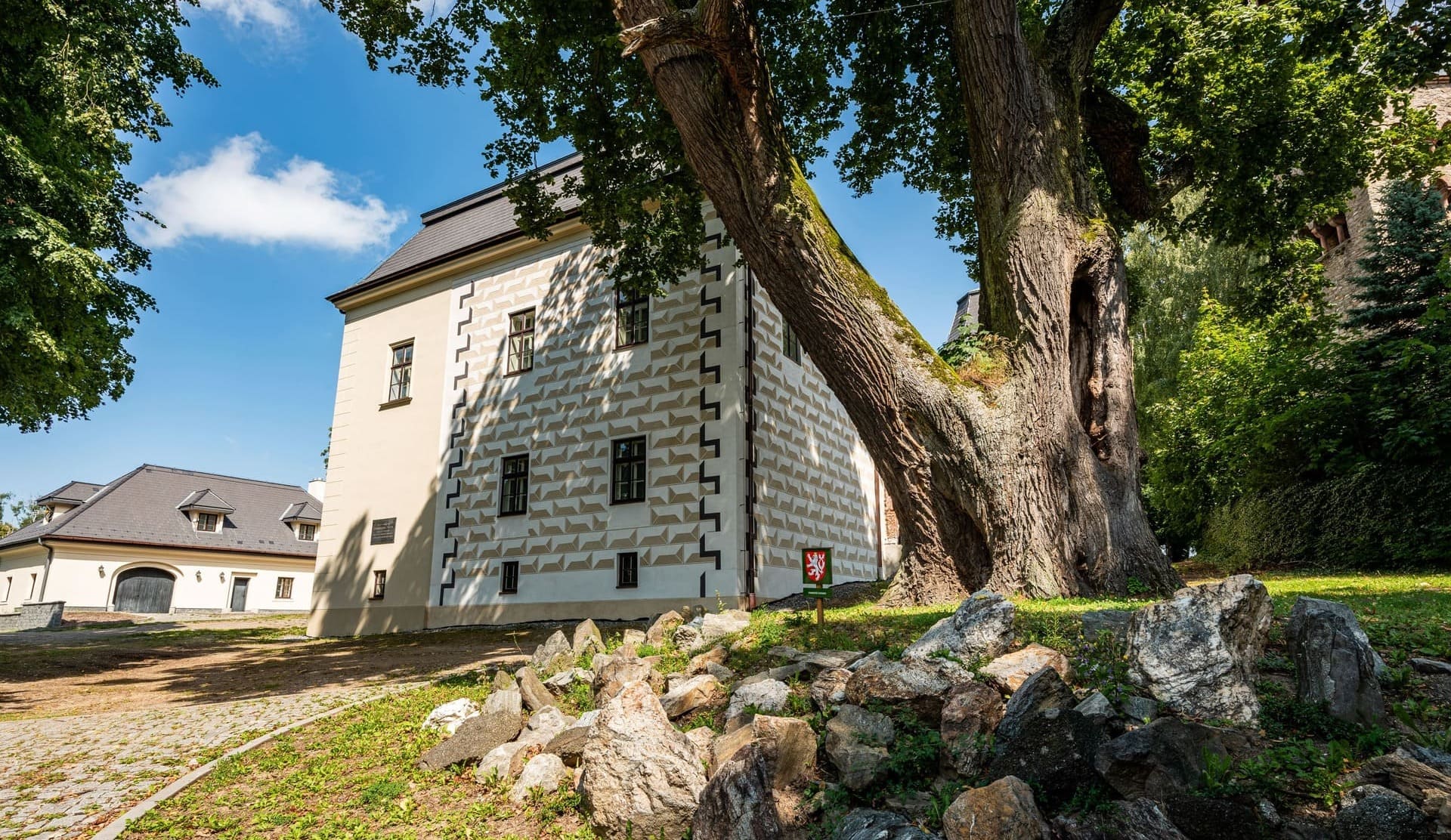
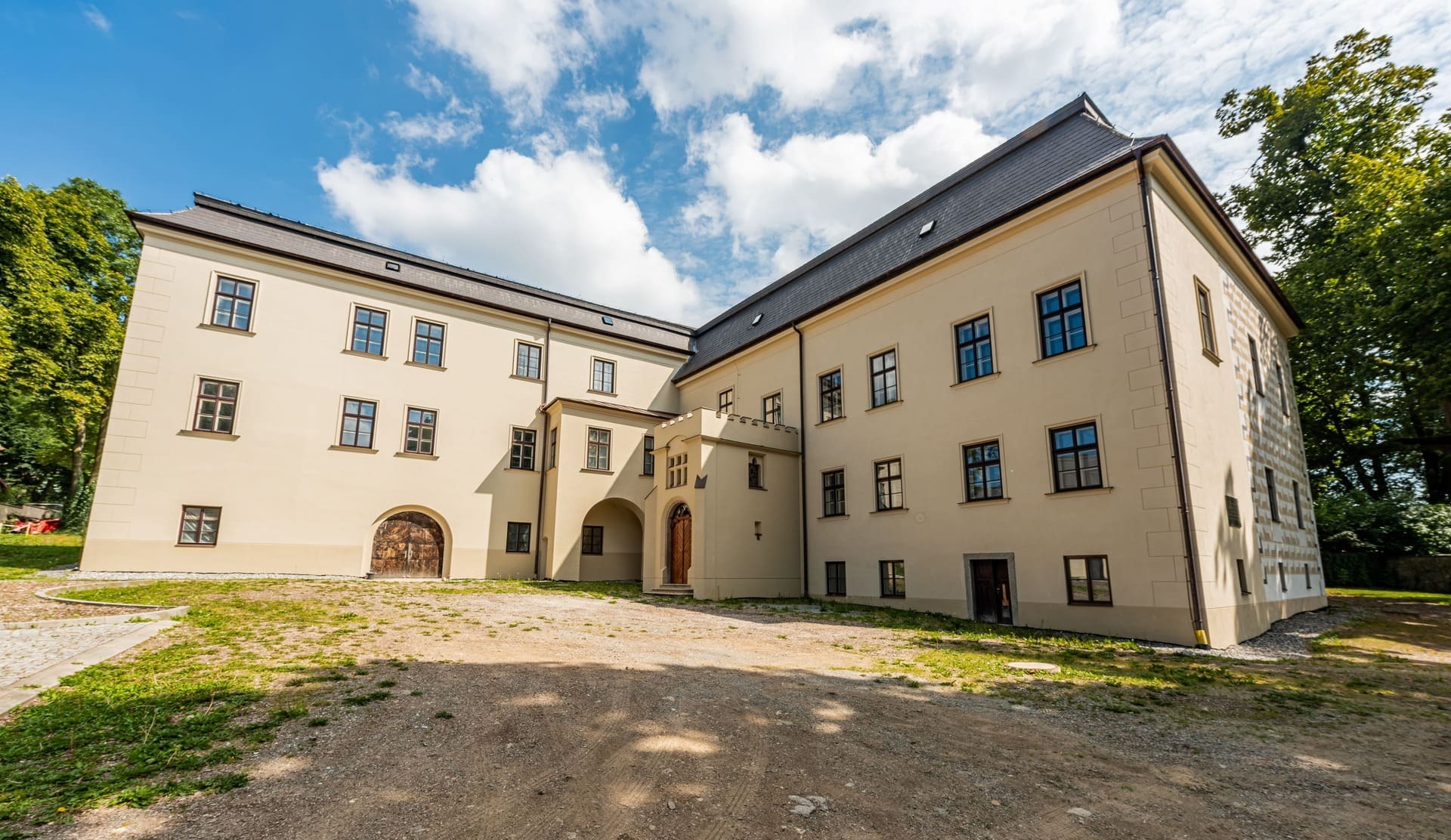
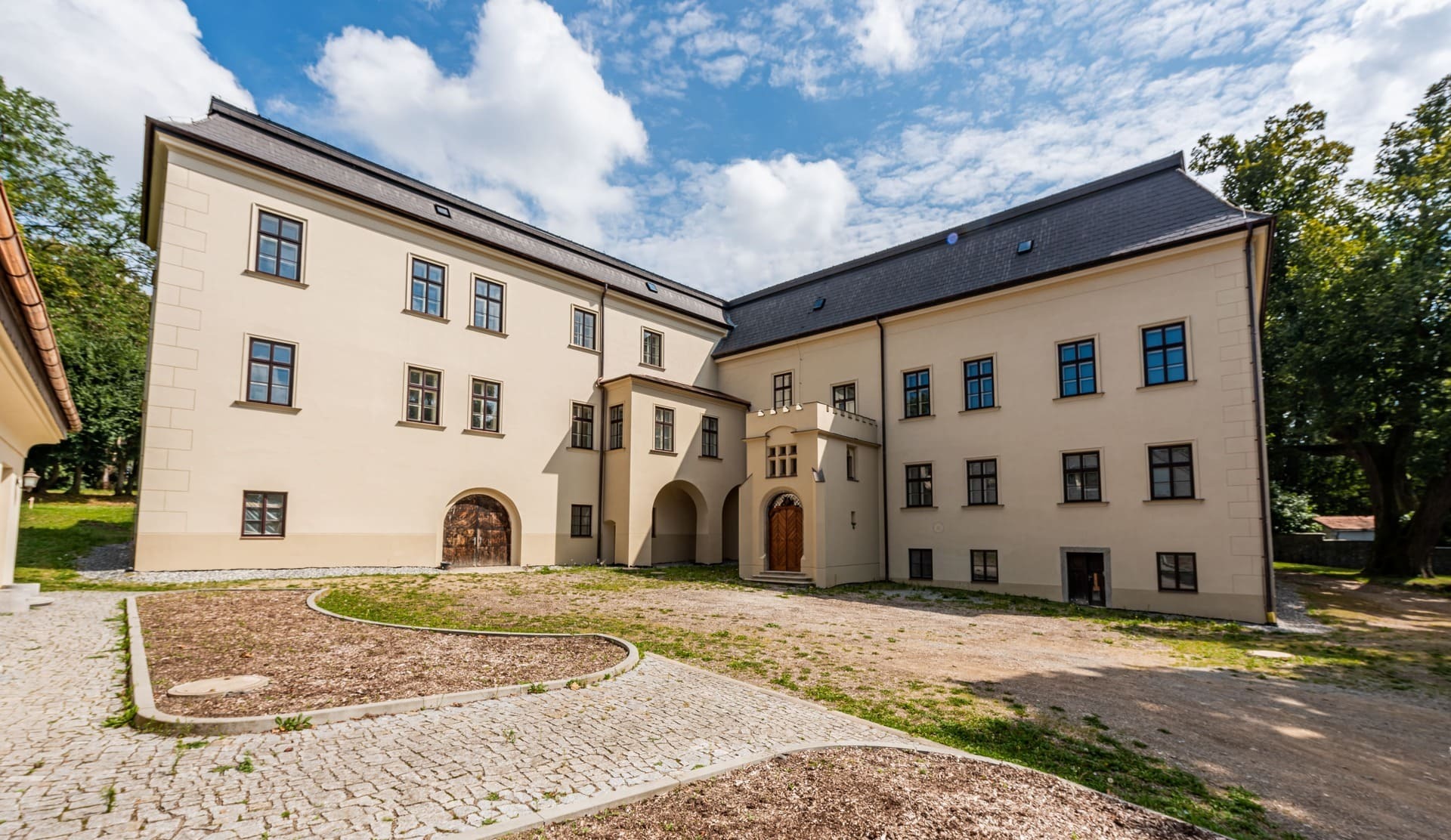
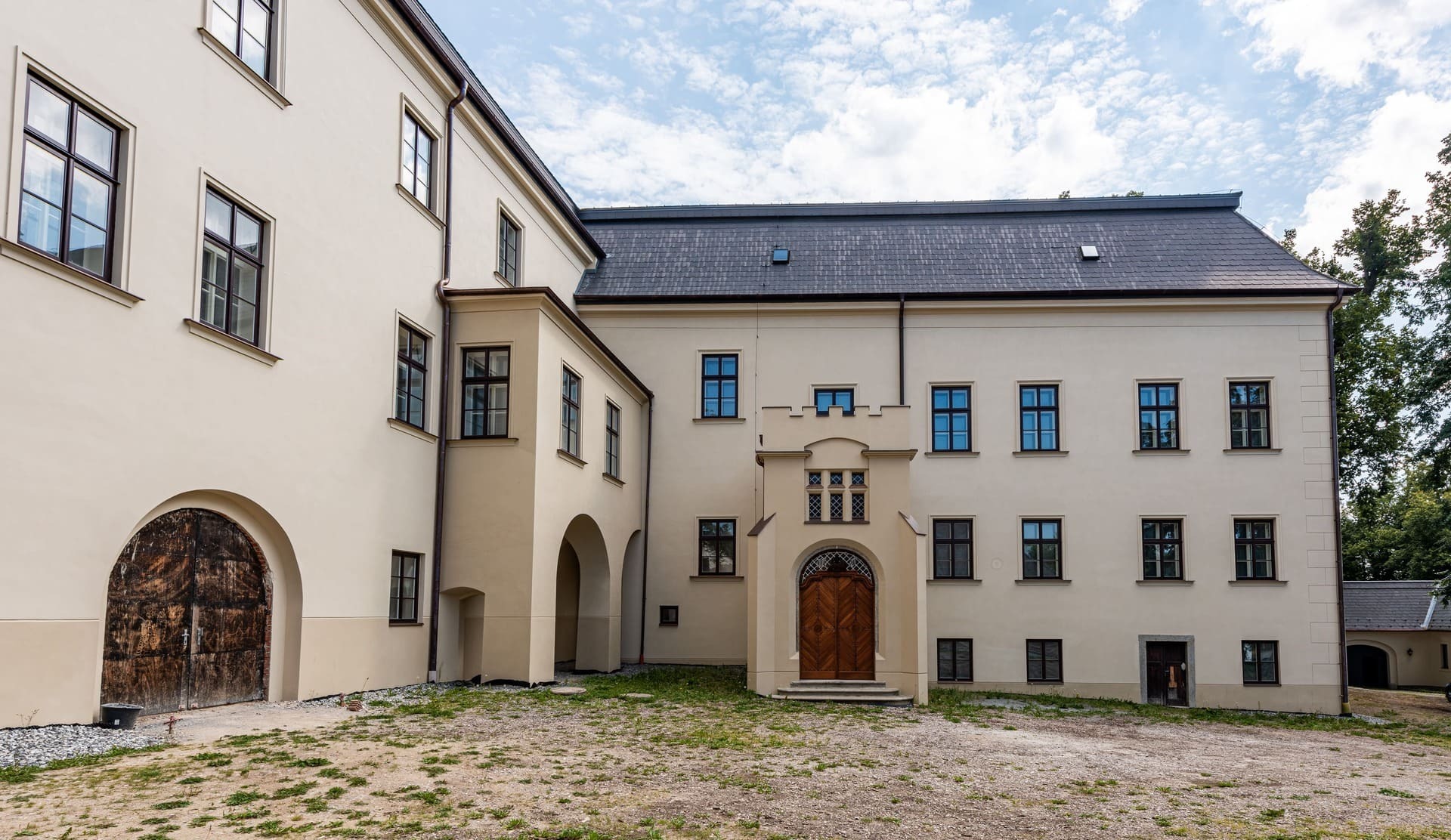
The town of Neustupov lies on the historic road from Votice to Mladá Vožice. Its origins date back to the Romanesque period, although its connection with the lord Neustup, mentioned in documents from 1185–1226, cannot be proven. However, there is evidence that a church stood in Neustupov in the 12th century. By the 14th century at the latest, the village had become the residence of the Neustupov noble family, whose first known members, Vilém and Petr, exercised patronage rights over the church together with the lords of Soběšín. The Neustupov Gothic fortified house next to the church was still clearly visible in 1652 (‘Old Castle’). The families from Neustupov and Soběšín were apparently related and took turns owning the Neustupov estate until the mid-15th century. Jan Neustupovský of Slavkov (†1545) had a son, Kuneš, who, due to the absence of a male heir, bequeathed the entire estate to his wife Alžběta of Malovice. The heiress of Neustupov then became the daughter of Kuneš and Alžběta, Eva, who was married to Kašpar Kaplíř of Sulevice. Eva, who according to contemporary accounts was a very savvy businesswoman, is also credited with the construction of the Renaissance castle, which replaced the old fortress, which was certainly uncomfortable during Eva's era. Directly across the road from the fortress, a two-storey castle building with a rectangular floor plan and sgraffito decoration was built. This was the present-day east wing, to which the west wing was later (perhaps at the beginning of the 17th century) added at right angles.
After his wife's death, Kašpar Kaplíř of Sulevice became an important figure in the second Estates Uprising and the oldest person executed during the Old Town execution in 1621 (he is commemorated by a plaque above the main entrance). His estates, including Neustupov, were confiscated and transferred in 1627 to General Balthasar Marradas' regiment. Three years later, they were sold to Don Martin de Hoeff-Huert, an officer and feared enforcer of the recatholisation. After his death (1633), Neustupov, which in 1654 included 15 villages in addition to the town, changed hands several times. Among the more famous owners were the Dohalští family of Dohalice (from 1695). However, in 1712, Neustupov had to be sold again due to debts, and the rapid change of owners continued in the following decades. It was not until 1809 that Neustupov was held for a longer period by the Prague burgher family of Rommbald. At that time, the estate consisted of four farmyards, two sheepfolds and several ponds. It was inhabited by a total of 1,337 ‘souls’ (including the Jewish population). The manor house had an apartment and office for the lord's administrator.
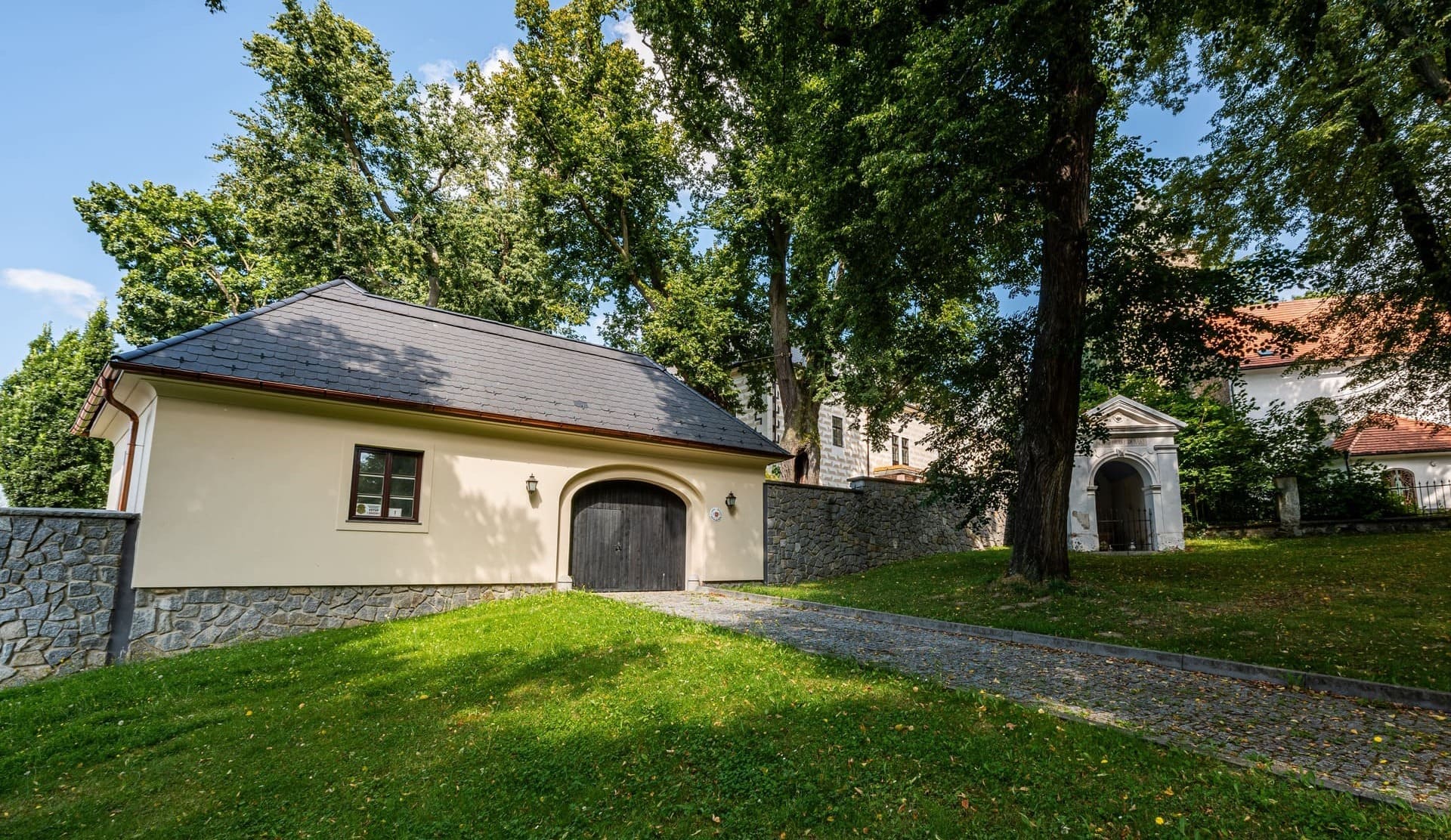
In 1887, Anton Rommbald sold Neustupov to Karel and Marie Kraus, from whom Count Vladimír of Aichelburg acquired it in 1892 for his wife Helena. The couple initiated minor structural alterations (for example, a polygonal corner tower was added to the castle), and the castle park underwent significant changes. However, Neustupov was confiscated from the Aichelburgs after 1948, and the castle was transferred to the local national committee, which established a medicine warehouse there. After 1989, the property was returned to Vladimír Aichelburg, and since 2000, the castle has been owned by INTEC - export and import. The current owner (since 2020) is renovating the castle, organising cultural events there and planning to open it to the public. The silhouette of Neustupov Castle is complemented by a 600-year- old mighty lime tree.
Neustupov - Chateau
- Adress: Zámek Neustupov č.p. 1, 257 86 - Neustupov
- GSM:
- Phone:
- E-mail: info@zamek-neustupov.cz
- Website: www.zamek-neustupov.cz